
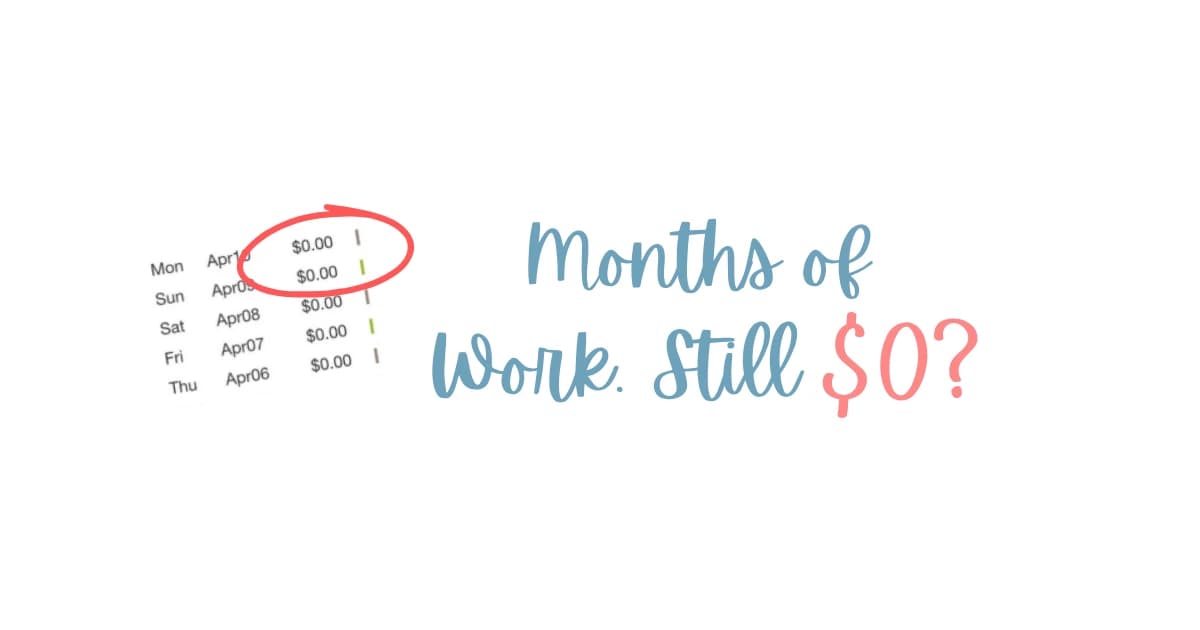
Getting traffic from Pinterest but making little to no money? Trust me, this is one of the most frustrating situations you can experience when building a website.
You spend time creating pins, publishing blog posts, and trying to grow your Pinterest account. Eventually, your hard work starts paying off. Your impressions increase, people click through to your website, and your monthly traffic finally starts growing.
But when you check your income, nothing really changes.
Your website is getting visitors, but your earnings are barely moving. Maybe your ad network application gets rejected, your affiliate links aren’t converting, or you’re simply not making enough money to justify the time you’re putting into your website.
So, what’s going wrong?
Here’s the thing: Pinterest traffic doesn’t automatically turn into income. Traffic creates opportunities to make money, but you still need a monetization strategy that helps you turn those visitors into revenue.
I’ve made money with affiliate marketing myself, and one thing I’ve learned is that getting people to visit your website and making money from those visitors are two completely different challenges.
In this article, I’ll walk you through why your Pinterest traffic might not be making you money, the monetization methods you can use, and how to start building a website that doesn’t rely on just one income source.
Why Your Pinterest Traffic Makes No Money
Let’s start with something important: getting Pinterest traffic is not the same as building a profitable online business.
When you first start working on your website, the process seems pretty straightforward. You launch your website, publish content, create pins, and wait for traffic to arrive.
Then, once you start getting visitors, you expect to add advertisements or affiliate links and finally start making money.
Unfortunately, it doesn’t always work that way.
You might get hundreds or even thousands of visitors every month without generating much revenue. Your ad network application might get rejected, your affiliate links might barely convert, and your website might not have another way to make money.
At this point, it’s easy to think that your Pinterest strategy isn’t working.
But what if traffic isn’t actually your biggest problem?
The real issue might be what happens after someone clicks on your pin.
Are you giving those visitors a way to make a purchase? Are you recommending products that can generate meaningful commissions? Are you building an email list or offering your own products?
If the answer is no, you’re missing opportunities to monetize the traffic you’re already getting.
The goal isn’t just to get more Pinterest visitors. The goal is to turn those visitors into revenue.
And to do that, you need to start thinking beyond traffic generation.
1. You’re Focusing on Traffic Instead of Monetization
One of the biggest mistakes I see in Pinterest marketing is focusing almost entirely on getting more traffic.
Of course, traffic matters. Without visitors, you have fewer opportunities to make sales, earn affiliate commissions, or generate advertising revenue.
But traffic is the engine of your online business, not the destination.
You can have a Pinterest account that generates thousands of clicks every month. However, if those visitors aren’t clicking on affiliate links, buying your products, or joining your email list, your traffic might not be generating much value for your business.
Imagine spending months publishing blog posts and creating pins. Eventually, you start getting consistent traffic, and everything looks promising.
But you haven’t thought about how each blog post contributes to your income.
Some visitors read your content and leave. Others might browse another article before leaving. Very few take an action that generates revenue.
That’s when you realize that traffic alone isn’t enough.
You need to think about monetization before you reach this stage.
When creating content for Pinterest, I would think about more than just how many visitors a blog post could attract. I’d also consider whether that content creates an opportunity to earn money through advertisements, affiliate marketing, digital products, or email marketing.
You don’t need every blog post to use every monetization method. The important thing is to have a plan for what you want your traffic to do once it reaches your website.
Instead of asking only, “How can I get more Pinterest traffic?” start asking:
- How can I monetize the visitors I’m already getting?
- Can I naturally include relevant affiliate links in my content?
- Is there a digital product I could offer?
- Can I encourage readers to join my email list?
- Am I relying too heavily on one way of making money?
These questions can help you shift your focus from simply growing your website to building a business around that traffic.
2. Your Website Isn’t Making Money From Display Ads
Display ads are one of the first monetization methods many bloggers consider.
And honestly, I think ads are a great foundation for a website that receives Pinterest traffic.
The idea is simple: you publish content, attract visitors, display advertisements on your website, and earn revenue from that traffic.
Sounds easy, right?
The problem is that getting accepted into an ad network isn’t always straightforward.
You might spend months building your website and creating content, only to have your application rejected by AdSense or another ad network. That can be frustrating, especially when you’ve already started getting traffic.
Even decent websites can experience rejection, and getting traffic doesn’t guarantee acceptance.
But let’s say you do get accepted.
Does that mean your website will suddenly start generating a substantial income?
Not necessarily.
For example, let’s say your website receives 5,000 to 10,000 visits per month. Even with a decent RPM, your advertising income might be around $50 to $100, depending on the results you’re getting.
That’s certainly better than making nothing, but it might not be enough to replace your income or turn your website into the business you want.
This is where you need to think about the bigger picture.
I wouldn’t necessarily abandon display ads just because the initial income is small. Instead, I’d treat them as one part of a larger monetization strategy.
Ads can help you earn money from visitors who aren’t ready to purchase anything. But you shouldn’t assume that advertisements alone will generate the income you want.
If your website is already getting Pinterest traffic, consider how you can combine advertising revenue with other monetization methods.
That way, you’re not depending entirely on the amount of money your ads generate each month.
3. Your Affiliate Marketing Strategy Isn’t Working
Affiliate marketing is another popular way to monetize Pinterest traffic.
I’ve made a lot of money with affiliate marketing myself, so I know it can absolutely work.
However, affiliate marketing isn’t as simple as adding a few links to your blog posts and waiting for commissions to arrive.
The results depend on several things, including how many people visit your website, how many click on your affiliate links, and how many of those people eventually make a purchase.
Let’s say your website receives a few thousand visitors per month.
Only a small percentage of those visitors click on your affiliate links. Then, only a small percentage of those who click actually purchase something.
If you’re promoting a product that pays a small commission, you might end up making very little money despite getting consistent traffic.
This is why affiliate marketing can feel disappointing when your website is still growing.
You’re doing the work, people are visiting your website, and you’re including affiliate links, but the commissions aren’t adding up the way you expected.
Choose affiliate offers that make sense for your income goals
One thing I’d pay attention to is the commission you earn from each sale.
If you’re promoting products that generate tiny commissions, you might need a lot of traffic and conversions before the income becomes meaningful.
On the other hand, promoting higher-priced products with larger commissions can change the numbers.
For example, if a product pays you $50 or $100 per sale, a single conversion can have a much bigger impact than a product that pays only a small commission.
Of course, higher commissions don’t automatically guarantee more sales. But they can make affiliate marketing more worthwhile when the products you promote are a good fit for your audience.
Make your affiliate links part of your monetization strategy
Rather than relying on affiliate marketing alone, think about how it fits into your overall business.
You can combine affiliate links with display ads, your own digital products, and email marketing.
The idea is to create multiple opportunities to earn money from your content instead of expecting every visitor to generate revenue in the same way.
If your affiliate income is currently low, don’t assume that Pinterest traffic is useless.
Take a closer look at your monetization approach. You might need to think beyond traffic volume and consider how much revenue your current visitors can realistically generate.
4. You’re Not Selling Your Own Digital Products
If there’s one monetization method I think deserves more attention, it’s creating your own digital products.
Why?
Because selling your own product changes the economics of your website.
With affiliate marketing, you earn a commission when someone purchases a product through your link. With display ads, your income depends on the revenue generated by your advertising.
But when you sell your own digital product, you’re selling something you created and control.
You decide what to offer, how to price it, and how to present it to your audience.
For example, you could create:
- A $10 ebook
- A $17 training
- A recipe collection
- Printable products
- Other digital resources that fit your content
Let’s imagine that you’re already getting Pinterest traffic but your advertising income is relatively small.
If your website earns $50 to $100 per month from ads, that might feel disappointing after all the work you’ve put into your content.
Now imagine that you create a digital product priced at $17.
Just a few sales could generate more income than your advertisements for the entire month.
That’s the difference I’m talking about.
Instead of relying exclusively on small advertising earnings or affiliate commissions, you have another way to monetize the audience you’ve already built.
And you don’t necessarily need to wait until your website receives enormous amounts of traffic before considering this approach.
You can start thinking about digital products while your website is growing.
The key is to consider what kind of product makes sense for your content and your audience.
For me, this is one of the most interesting parts of building an online business with Pinterest. You’re not limited to earning money from other people’s products or advertisements. You can create something of your own and build another income stream around it.
And sometimes, that can make a bigger difference than simply trying to get more visitors.
5. You’re Relying on Only One Income Stream
Let’s say your website finally starts making money from display ads.
At first, you’re happy because you’ve managed to turn your Pinterest traffic into income.
But then you start relying on those advertisements as your only source of revenue.
This can become a problem.
Pinterest traffic can fluctuate. Competition changes, more creators enter the platform, AI-generated content becomes more common, and algorithm changes can affect the traffic your website receives.
I’ve experienced traffic drops myself, and that’s one reason I don’t think relying on a single income source is a great position to be in.
Imagine that your website makes money exclusively from display ads and your traffic drops by 50%.
Your advertising income could drop significantly, too.
Now you’re left depending on a smaller amount of traffic to generate all your website revenue.
That’s why I prefer thinking about monetization in layers.
Instead of building a website that depends entirely on advertisements, you can combine several income streams:
Display ads: Earn advertising revenue from the visitors coming to your website.
Affiliate marketing: Recommend relevant products and earn commissions when readers make purchases through your links.
Digital products: Create your own ebooks, training materials, printables, recipe collections, or other products you can sell.
Email marketing: Build an email list so you have another way to communicate with your audience and promote your offers.
Each of these methods serves a different purpose.
Some visitors might generate advertising revenue. Others might purchase an affiliate product. Some might buy your digital products, while others might join your email list and purchase something later.
You don’t need every visitor to take the same action.
The goal is to create multiple opportunities to generate revenue from your content and audience.
This is also why I wouldn’t judge the potential of a Pinterest website based only on its monthly page views.
A website with several monetization methods has more ways to earn money than a website that relies on a single revenue source.
And if one source becomes less reliable, you have other sources to work with.
6. You’re Not Building an Email List
Another thing I wouldn’t ignore when monetizing Pinterest traffic is building an email list.
Think about what happens when someone clicks on one of your pins.
They land on your website, read your article, and eventually leave.
If you haven’t given them another way to stay connected with you, that interaction might be the end of the relationship.
But what if you could encourage some of those visitors to join your email list?
Now, instead of relying exclusively on Pinterest to bring people back to your website, you have another way to communicate with your audience.
One approach is to offer a free and helpful resource in exchange for an email address.
This could be a guide, a useful resource, or a step-by-step course that provides value to your audience.
The idea is to give visitors a reason to subscribe rather than simply asking them to join your list without offering anything in return.
Once someone subscribes, you can continue communicating with them through email.
You can share helpful content, introduce relevant affiliate offers, and promote your own digital products.
You can also use an autoresponder to automate a series of emails instead of having to send every message manually.
Why an email list matters when Pinterest traffic drops
Let’s imagine that your website has built an email list of 2,000, 3,000, or even 5,000 subscribers.
Now imagine that your Pinterest traffic suddenly drops.
If your entire business depends on Pinterest sending visitors to your website, that traffic drop could create a serious problem.
But if you’ve also built an email list, you have another way to reach people who have already chosen to hear from you.
You can continue sharing your offers with your subscribers instead of relying exclusively on new Pinterest visitors.
Of course, having an email list doesn’t guarantee sales. But it gives you another way to promote your products and affiliate offers.
And that’s exactly why I see email marketing as an important part of a broader monetization strategy.
Pinterest can help people discover your website. Your email list can help you maintain that connection.
Together, they give you more opportunities to build a business around your content.
How to Monetize Pinterest Traffic: My Recommended Strategy
So, if your Pinterest traffic isn’t making money, where should you start?
I wouldn’t immediately assume that you need to create more content or spend all your time trying to increase your monthly visitors.
Instead, I’d look at the monetization opportunities available with the traffic you’re already getting.
Here’s how I’d approach it.
Step 1: Start with display ads
If your website is eligible for an ad network, display ads can be a useful starting point.
They allow you to earn revenue from visitors without requiring every reader to make a purchase.
However, don’t expect advertising income alone to solve every monetization problem.
Treat ads as one layer of your business rather than the entire strategy.
Step 2: Add relevant affiliate offers
Next, look at how affiliate marketing fits into your content.
Consider the products you’re promoting, the commissions they generate, and whether your current traffic is translating into affiliate clicks and sales.
If you’re earning very little from affiliate links, think about whether the products and commissions make sense for your goals.
You can also create opportunities for readers to explore relevant recommendations within your content.
The goal is to make affiliate marketing another source of income rather than depending on it exclusively.
Step 3: Create your own digital products
This is where I’d start thinking more seriously about building something you own.
You don’t necessarily need a complicated product to get started.
An ebook, training, printable, or recipe collection could be an option, depending on the type of content you publish.
The important thing is to have an offer you can sell to the audience you’re already attracting.
Even a few sales can make a noticeable difference when compared with the income generated by ads alone.
And because you control your product and pricing, you have more control over this part of your monetization strategy.
Step 4: Build your email list
Don’t let every Pinterest visitor leave your website without considering whether there’s a way to maintain the relationship.
Create a useful free resource and encourage interested visitors to subscribe.
Then, use email to share content and promote relevant affiliate offers or your own products.
This gives you another way to generate revenue without relying entirely on Pinterest traffic every time you want to reach your audience.
Step 5: Build multiple income streams together
Finally, bring everything together.
Rather than choosing between display ads, affiliate marketing, digital products, and email marketing, consider how they can work alongside one another.
Your Pinterest traffic brings visitors to your website.
Your display ads generate advertising revenue. Your affiliate links create opportunities to earn commissions. Your digital products give you something of your own to sell. Your email list helps you stay connected with your audience.
These income streams don’t have to operate independently.
They can support one another as part of the same business.
And that’s the bigger goal: building a website that has multiple ways to generate revenue instead of depending on a single monetization method.
Why More Pinterest Traffic Doesn’t Always Mean More Money
One of the biggest lessons I want you to take away from this article is that more traffic doesn’t automatically mean more income.
Of course, growing your Pinterest traffic is important. You still need people to discover your content and visit your website.
But you also need to think about how effectively you’re monetizing those visitors.
Imagine two websites receiving Pinterest traffic.
One relies entirely on display ads.
The other combines display ads, affiliate marketing, digital products, and an email list.
Even if both websites receive traffic, their monetization strategies are very different.
The second website has more opportunities to generate revenue because it isn’t depending on a single income source.
This doesn’t mean that every website with multiple income streams will automatically make more money. The results still depend on how well those monetization methods work.
However, it does show why I wouldn’t focus exclusively on increasing page views.
Sometimes, the opportunity isn’t getting more traffic. It’s finding better ways to monetize the traffic you already have.
If you’re currently receiving a few thousand visitors per month, start by looking at the income opportunities available to you right now.
Can you earn advertising revenue? Are your affiliate links generating commissions? Could you create a digital product? Are you building an email list?
These are the questions that can help you move beyond simply growing a Pinterest account and start thinking about your website as a real business.
And that’s an important distinction.
Pinterest traffic is valuable, but what you do with that traffic determines how you can turn it into revenue.
Why am I getting Pinterest traffic but no sales?
Getting Pinterest traffic doesn’t guarantee that visitors will make a purchase. Your website needs a monetization strategy that gives people opportunities to generate revenue through affiliate offers, digital products, or other methods. If visitors read your content and leave without taking an action that generates income, your traffic might not translate into meaningful earnings.
Can you make money from Pinterest traffic with display ads?
Yes, display ads can be one way to monetize Pinterest traffic. However, your website needs to be accepted by an ad network, and the income you generate depends on your results. Ads can provide a foundation for monetization, but they might not be enough to generate the income you want on their own.
Is affiliate marketing enough to monetize Pinterest traffic?
Affiliate marketing can generate income, but the results depend on factors such as traffic volume, link clicks, purchases, and the commissions you earn. If you’re receiving only a few thousand visitors per month and promoting products with small commissions, your earnings might be limited. Combining affiliate marketing with other income streams can give you additional opportunities to monetize your audience.
Should I sell digital products on my website?
Digital products are worth considering if you want to create another income stream beyond advertising and affiliate commissions. Products such as ebooks, training materials, printables, and recipe collections can give you something of your own to sell. You control the offer and pricing, and even a few sales can contribute meaningfully to your monthly income.
Why should I build an email list if I already get Pinterest traffic?
An email list gives you another way to communicate with people who have visited your website and chosen to subscribe. If your Pinterest traffic drops, you can still reach your subscribers and promote relevant content, affiliate offers, or digital products. This helps reduce your reliance on Pinterest as your only way to reach your audience.
How many Pinterest visitors do I need to make money?
There’s no single traffic number that guarantees meaningful income. A website receiving thousands of visitors might generate little revenue if its monetization strategy isn’t working effectively. Instead of focusing only on visitor numbers, consider how you’re monetizing your current traffic through display ads, affiliate marketing, digital products, and email marketing.
Final Thoughts
If your Pinterest traffic isn’t making you money, I don’t think you should immediately assume that your website has failed.
Getting traffic and monetizing traffic are two different challenges.
You might have already done the hard work of publishing content, creating pins, and getting people to visit your website. Now, it’s time to think about what happens after those visitors arrive.
Are you relying entirely on display ads? Are your affiliate commissions too small to make a meaningful difference? Have you considered creating your own digital products? Are you building an email list so you have another way to reach your audience?
These are the questions I’d start asking.
For me, the biggest takeaway is that you shouldn’t build a Pinterest business around traffic alone. You should build it around multiple income streams that work together.
Start with ads if that makes sense for your website. Add affiliate marketing where it fits. Explore creating your own digital products, and build an email list along the way.
You don’t have to implement everything overnight. But you should start thinking beyond page views and consider how your existing traffic can support your business.
Because at the end of the day, the goal isn’t just to get more Pinterest clicks.
It’s to turn those clicks into a sustainable source of income.
And sometimes, the next step toward making more money isn’t getting more traffic. It’s learning how to monetize the traffic you already have.