
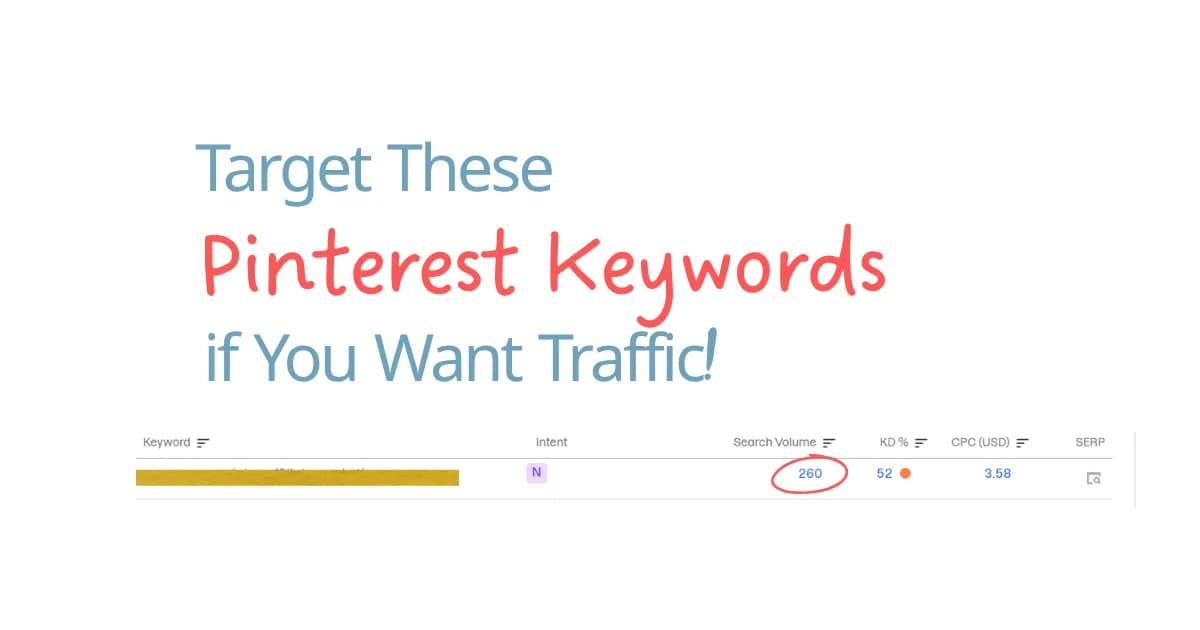
When it comes to Pinterest keyword research, one question I often think about is whether I should target low-volume or high-volume keywords.
Should I go after popular keywords that attract more searches, or focus on smaller, more specific keywords that may be easier to rank for?
If you’re trying to grow your Pinterest account, especially when you’re just starting out, choosing the right keywords can make a big difference in your strategy.
My recommendation? Target both low-volume and high-volume keywords, but be strategic about it.
Low-volume keywords can help you build authority and attract more focused traffic, while high-volume keywords give you the opportunity to reach a broader audience.
The key is knowing which keywords to prioritize first and when to start targeting more competitive ones.
In this guide, I’ll explain the difference between low-volume and high-volume keywords on Pinterest, why both matter, and how I would approach keyword targeting to build authority over time.
Low-Volume vs. High-Volume Keywords on Pinterest: What’s the Difference?
Before deciding which keywords to target, it’s important to understand the difference between low-volume and high-volume keywords.
Both have a place in your Pinterest SEO strategy, but they serve different purposes.
What Are Low-Volume Keywords on Pinterest?
Low-volume keywords are keywords that have a smaller search volume.
These keywords are often more specific, making them useful when you want to target a particular niche or audience.
One of the main advantages of targeting low-volume keywords is that they’re generally easier to rank for, especially when your Pinterest account is new.
Instead of competing immediately for broad, popular keywords, you can focus on more specific topics and work on building your account’s authority.
I also like the fact that low-volume keywords can bring more consistent and focused traffic. Rather than trying to reach everyone, you’re targeting people searching for something more specific.
Why I would target low-volume keywords:
- They’re generally easier to rank for.
- They’re a good starting point for new Pinterest accounts.
- They can attract more focused traffic.
- They help you build authority within a niche.
For me, low-volume keywords are a smart starting point when building a Pinterest account from the ground up.
What Are High-Volume Keywords on Pinterest?
High-volume keywords are keywords that attract a larger search audience.
These keywords can be appealing because they offer the opportunity to reach more people. However, there’s one important thing to consider: competition.
High-volume keywords are highly competitive, which can make them harder to rank for.
If your Pinterest account is new and hasn’t built much authority yet, relying on these keywords from the beginning may not be the best approach. You might find that gaining traction takes time.
That doesn’t mean you should avoid high-volume keywords altogether.
I still believe they’re worth targeting. The important thing is not to depend on them too early in your Pinterest growth journey.
Why I would target high-volume keywords:
- They allow you to target broader topics.
- They offer the opportunity to reach a larger audience.
- They’re worth pursuing as your account builds authority.
- They can become part of your strategy as you expand beyond niche topics.
My approach is to keep high-volume keywords in the bigger picture while focusing on more achievable opportunities first.
Low-Volume vs. High-Volume Pinterest Keywords: Which Is Better?
So, which type of keyword should you choose?
Honestly, I wouldn’t look at this as a choice between one or the other.
I recommend targeting both, but prioritizing them strategically.
Here’s how I compare the two:
| Keyword factor | Low-volume keywords | High-volume keywords |
| Search volume | Lower | Higher |
| Competition | Generally easier to rank for | Highly competitive |
| Best starting point | New Pinterest accounts | A longer-term targeting goal |
| Traffic potential | More focused traffic | Opportunity to reach a broader audience |
| My approach | Prioritize these first | Target these gradually |
As you can see, both types of keywords have a role to play.
Low-volume keywords help you focus on more specific topics and build authority. High-volume keywords give you opportunities to expand into broader topics.
Instead of choosing only one, I would use both as part of a long-term Pinterest keyword strategy.
Why I Recommend Starting With Low-Volume Keywords on Pinterest
If you’re building a new Pinterest account, I wouldn’t make highly competitive keywords your main priority.
Here’s why.
1. They’re Generally Easier to Rank For
When your Pinterest account is new, competing for high-volume keywords can be challenging.
These keywords attract a lot of competition, and your account doesn’t have much authority yet.
Low-volume keywords give you a more manageable place to start.
Rather than focusing immediately on the broadest topics in your niche, you can target smaller, more specific keywords and work toward building your presence.
2. They Can Bring More Focused Traffic
Not every keyword needs to target the largest possible audience.
Sometimes, targeting a more specific topic is a better starting point because it helps you focus on the audience you’re trying to reach.
Low-volume keywords can bring more consistent and focused traffic, which makes them valuable when you’re building your Pinterest strategy.
3. They Help You Build Authority Gradually
I believe it’s important to think beyond individual keywords when planning your Pinterest SEO strategy.
Your goal shouldn’t be to target one popular keyword and hope it brings results.
Instead, start with long-tail or niche keywords that are easier to rank for, and gradually work toward broader, more competitive topics.
This gives you a more strategic way to approach keyword targeting instead of relying entirely on high-volume keywords from the beginning.
Should You Ignore High-Volume Keywords on Pinterest?
Absolutely not.
Although I recommend prioritizing low-volume keywords at the beginning, I wouldn’t ignore high-volume keywords completely.
They’re still worth targeting because they allow you to pursue broader topics and reach a larger audience.
The problem is relying on them too early.
When your account doesn’t have much authority yet, highly competitive keywords may take longer to gain traction. If your entire strategy depends on ranking for these keywords, you could end up overlooking more achievable opportunities.
Instead, I would keep high-volume keywords in my strategy while building authority with more specific keywords first.
As your account develops, you can gradually expand your targeting and start pursuing broader topics.
The goal isn’t to avoid competition forever. It’s to approach it strategically.
My Pinterest Keyword Strategy: Start Small and Expand Gradually
If I were planning a Pinterest keyword strategy, I would focus on building authority before making highly competitive keywords my main priority.
Here’s how I would approach it.
Step 1: Start With Long-Tail and Niche Keywords
Begin by targeting low-volume keywords that are more specific to your niche.
These keywords are generally easier to rank for, making them a practical starting point when your account is new.
Instead of immediately going after broad, high-volume keywords, focus on smaller opportunities first.
Step 2: Focus on Building Authority
Once you’ve identified your niche keywords, make building authority a priority.
The idea is to establish your presence around more specific topics before gradually moving toward broader ones.
Don’t rely entirely on high-volume keywords to bring traction to a new account.
Give yourself room to build authority through your initial keyword targeting strategy.
Step 3: Gradually Target Broader Keywords
As you build authority, start expanding your keyword targeting.
This is where high-volume keywords become more important in your strategy.
You can begin pursuing broader, more competitive topics rather than limiting your account to niche keywords alone.
The goal is to move gradually from more specific keyword opportunities toward broader ones.
Step 4: Use Both Types of Keywords in Your Overall Strategy
I wouldn’t treat low-volume and high-volume keywords as two completely separate strategies.
Instead, I’d consider how they work together.
Low-volume keywords help you focus on more achievable opportunities, while high-volume keywords give you room to expand your reach.
By targeting both strategically, you can work toward building authority without relying entirely on highly competitive keywords.
Common Mistakes to Avoid When Choosing Pinterest Keywords
When deciding between low-volume and high-volume keywords, there are a few things I would avoid.
Focusing Only on High-Volume Keywords
High-volume keywords can be tempting because they offer the potential to reach a larger audience.
However, they’re also highly competitive.
If your Pinterest account is new, relying only on these keywords can make it harder to gain traction.
I’d rather start with more specific keywords and gradually expand my targeting.
Ignoring Low-Volume Keywords
Just because a keyword has a lower search volume doesn’t mean you should overlook it.
Low-volume keywords can be easier to rank for and can bring more focused traffic.
They’re especially useful when you’re trying to establish your account within a niche.
Don’t dismiss them simply because they’re less popular.
Trying to Compete for Broad Keywords Too Early
Broad, high-volume keywords can be part of your long-term strategy, but I wouldn’t make them the only focus when starting out.
Build authority with long-tail and niche keywords first. Then, gradually move into more competitive territory.
This approach allows you to prioritize more achievable keyword opportunities while keeping your longer-term goals in mind.
Are low-volume keywords better for new Pinterest accounts?
I recommend starting with low-volume keywords when your Pinterest account is new.
They’re generally easier to rank for than highly competitive, high-volume keywords. They can also bring more consistent and focused traffic, making them a useful starting point as you build authority.
Should I target high-volume keywords on Pinterest?
Yes, I believe high-volume keywords are worth targeting.
However, I wouldn’t rely on them too early, especially when your account doesn’t have much authority yet.
Instead, start with long-tail or niche keywords and gradually move into broader, more competitive topics.
Can I target low-volume and high-volume keywords together?
Yes! In fact, that’s the approach I recommend.
You don’t have to choose one type of keyword and completely ignore the other.
Use low-volume keywords to focus on more achievable opportunities, then gradually expand your strategy to include high-volume keywords.
What keywords should I prioritize when starting on Pinterest?
I would prioritize long-tail and niche keywords first.
These keywords are generally easier to rank for, making them a practical starting point for a new account.
Once you’ve built more authority, you can gradually start targeting broader, more competitive keywords.
Should I avoid competitive keywords completely?
No. High-volume keywords are still worth pursuing.
The important thing is to avoid relying on them too early. Build authority with more specific keywords first, then gradually expand into more competitive topics.
Final Thoughts: Low-Volume or High-Volume Keywords on Pinterest?
If there’s one thing I want you to take away from this guide, it’s that you don’t have to choose between low-volume and high-volume keywords. You just need to be strategic about when you target them.
I recommend starting with long-tail and niche keywords, especially if your Pinterest account is new.
These keywords are generally easier to rank for and can help you attract more focused traffic while building authority.
Once you’ve established a stronger foundation, you can gradually move into broader, high-volume keywords and work toward reaching a larger audience.
Remember, you don’t need to compete for the biggest keywords right from the beginning.
Start with the opportunities that make sense for your account, build authority gradually, and expand your keyword strategy over time.
That’s the approach I’d take when choosing between low-volume and high-volume keywords on Pinterest.